Restoration of drystone walls along a pyrenean route
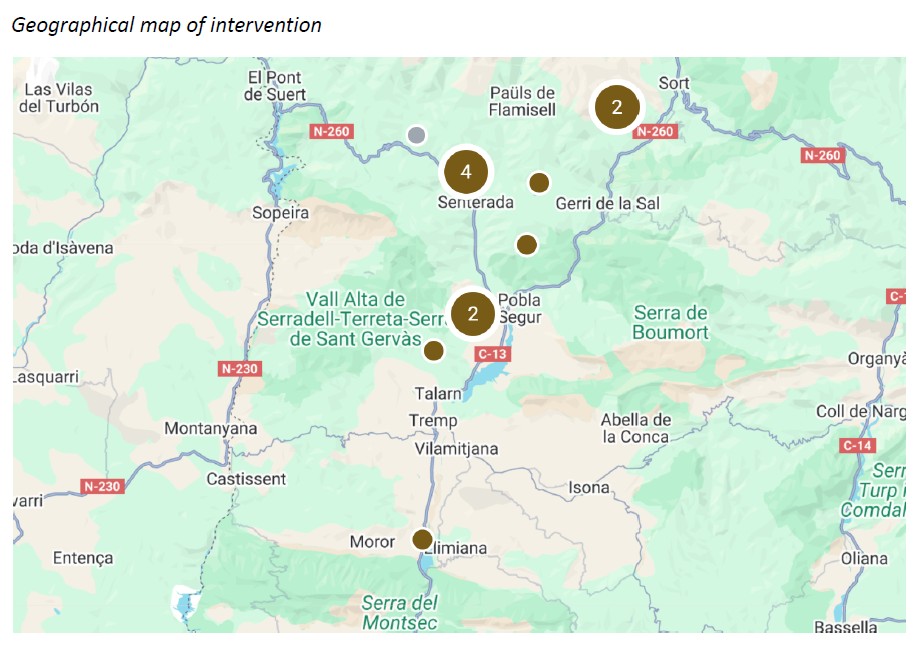
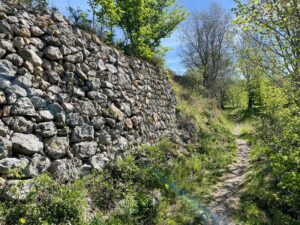
El Cinquè Llac (The Fifth Lake) is a Pyrenean route that crosses landscapes full of life. The route goes between forests and meadows bordered by dry-stone walls, a thousand-year-old construction-technique. In 2018, it was declared an intangible heritage of humanity by UNESCO. This technique is based on the construction of walls with stones that can be found nearby.
€0
donated in 2025
This amount has been used for the manual restoration of nine stretches of damaged drystone walls
0
Nature travellers
have donated the initial amount of € 7500,- that was doubled by us
0
stretches
of damaged drystone wall will be restored by local craftsmen
The drystone walls are part of the natural beauty
The dry-stone structures favour the development of rupicolous vegetation, as the walls are full of holes where lichens, mosses and plants can grow. It also provides microhabitats and shelter for arthropods, molluscs, reptiles and birds. Dry-stone walls, therefore, are a key element in our historical, cultural and natural heritage.
Where is the donation of GBTN spent on?
With great care 9 different damaged spots of drystone walls have been identified by the local organisation Associació Marques de Pastor and are prepared to be restored by local technicans . The donation by GBTN will sponsor this project for the full 100%. Also a small part of the budget will be used for the production of video footage, necessary for publicity goals and for accountability purposes.
What is the objected effect on biodiversity:
Control of soil erosion
Important contribution to refuge and habitat for local biodiversity
Preserving the walls next to very old roads and pathways
Creation of micro-habitats suitable for all kind of species
Enhancement of the high aesthetic values of the semi-natural landscape
Impression
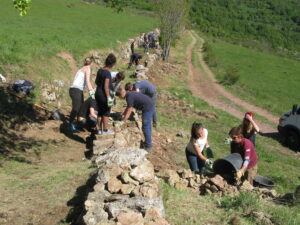
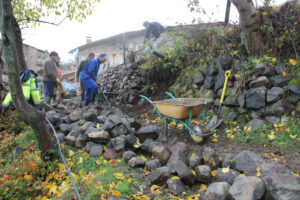
Local craftsmen at work
also volunteers help out
drystone walls
birding nests are restored
More info on the project
The local organization association Marques de Pastor is made up of 6 rural houses and a local travel agency. They set up the Gratitude Project which aims to repay nature, the landscape and the region in its broadest sense for all it does for us. Its goal is to strengthen the ties between people – both local and visitors – and the region via programmes promoting nature conservation and care for our cultural and historical heritage.