Restoration of degraded coastal forests in Galicia
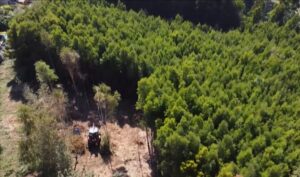
This unique project is about restoring the relationship between people and the native forest. To achieve this, we must restore and conserve local ecosystems degraded by past repopulation with non-native pines, eucalyptus, and the highly invasive Black Acacia, replacing them with Atlantic native species to boost wildlife and resilience.
€0
donated in 2026
This amount has been used for the removal of invasive species like Black Acacia and the replanting with native trees
0
Nature travellers
have donated the initial amount of € 10.000,- that was doubled by us
0
hectares
of degraded coastal forest is reforested to boost biodiversity
Relevance for Nature conservancy
The main role of the project is conservation, both active and passive. The central challenge is to reverse a landscape dominated by monocultures of the highly invasive Black Acacia, guiding its transition toward a naturalized native forest.
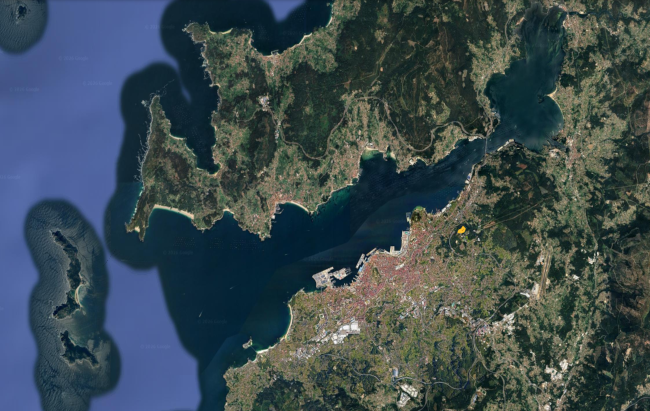
Our goal is to reach a point where it becomes hard to tell whether humans played any role. In essence, the project transforms communal land near an urban area and along major tourist routes such as the Camiño de Santiago, with a strong emphasis on environmental education.
Through this work, we show that such restoration is not merely an ideal, but a realistic and achievable outcome.
Where is the donation of GBTN spent on?
Restoring areas invaded by Black Acacia is extremely difficult, both economically and in terms of labor. In our case, these methods have been developed over many years through extensive field experience, particularly because one of our main priorities is to avoid the use of herbicides. Based on our previous experience, and considering that the first step involves cutting and removing acacias individually, we estimate that approximately €20,000 will be required to restore 3 hectares of land from acacia monoculture to native forest.
What is the objected effect on biodiversity:
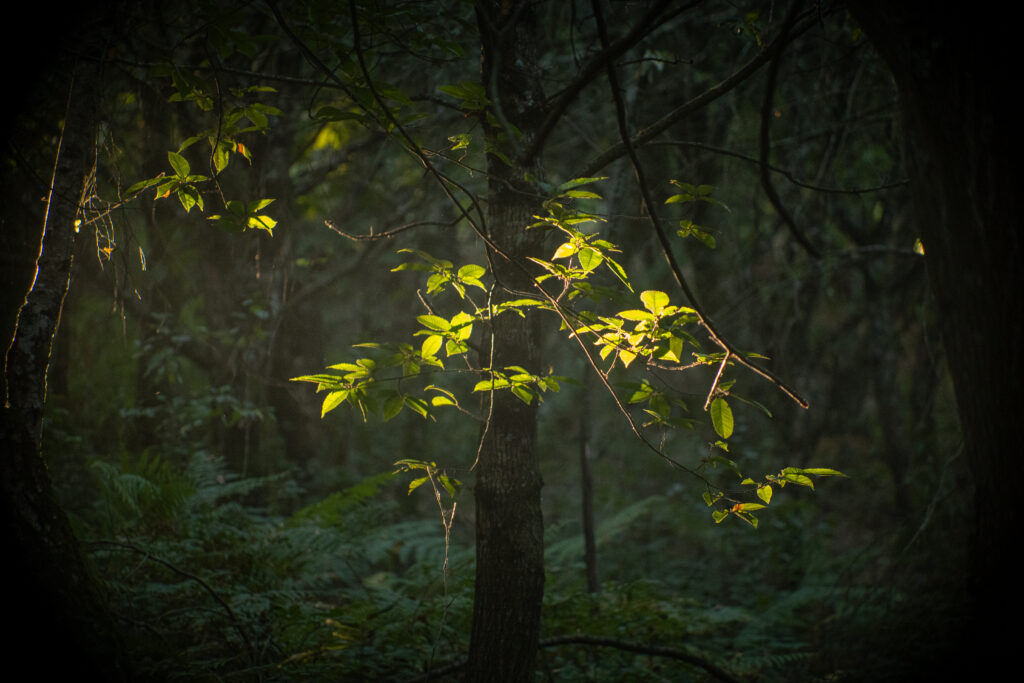
By replacing non-native species like black acacia and eucalyptus by the original native species biodiversity will be boosted
Creation of a semi-urban sanctuary where flora and fauna find the right conditions to settle and thrive
Reversing a process of misguided forestry policy that has lead to monoculture, degraded biosystems
Rich, diverse forests consisting of native species are less vulnerable to forest fires
By the engagement of local neighbours, commoners and volunteers, it restores the ancestral relation between nature and men
Impression
degraded forest
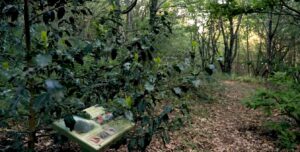
Educational nature path
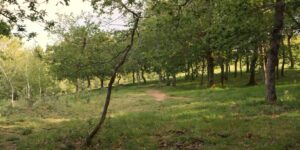
restored coastal forest
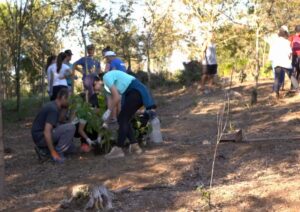
new trees are planted
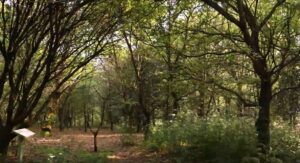
coastal forest with native species
monoculture forest is cut
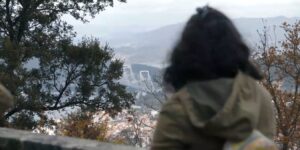
viewpoint on Vigo
More info on the project
The local organization Comunidade de Montes de Teis has transformed the once-degraded Monte da Madroa into a thriving Atlantic forest by removing invasive black acacia and planting native species, boosting biodiversity and wildfire resilience. It engages volunteers and youth in hands-on conservation and environmental education, and collaborated for decades with organizations like Greenpeace. Its sustainable, community-driven forest management has been recognized as an exemplary model of ecological restoration and stewardship. It has been very critical too to restore the relation with the residents around the project to propitiate to reconnect with the environment that ones were expelled during Franco’s dictatorship.