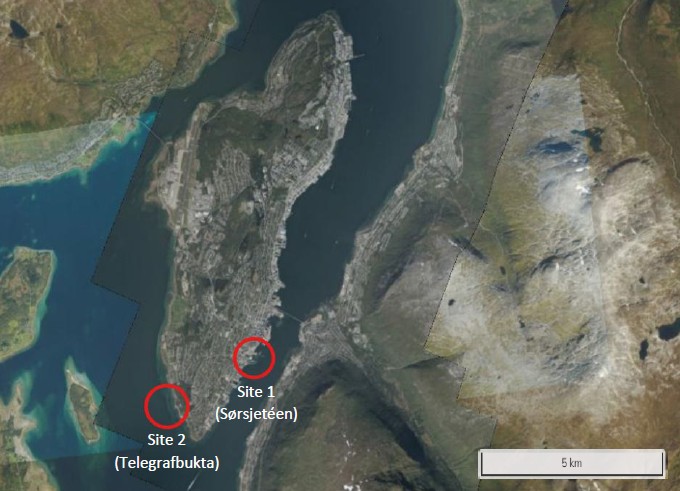
This project is all about restoring kelp forests near Tromsø with the local community. The two restoration sites are well suited for marine life, as they are exposed to nutrient rich currents that support growth and biodiversity. Like forests on land, underwater forests become more diverse as they mature, and we aim to maintain the conditions needed for them to thrive. Both sites are strategically located in two of Tromsø’s most visited areas, offering exceptional outreach potential. This restoration effort also provides an important knowledge base for scaling up kelp forest restoration across Norway in the years ahead.
€0
donated in 2026
This amount will be used for restoration events and diving gear
0
Nature travellers
have donated the initial amount of € 7.500,- that was doubled by us.
0
diving events
are to be organized to remove the urchins from the sea floor.
The rationale behind restoring kelp forests
Kelp forests are one of the most biodiversity-rich and productive ecosystems on Earth. They absorb excess nitrogen and CO2, counteracting climate change, eutrophication and ocean acidification. They are nurseries for fish and refuge to hundreds of marine species. They protect the coastline against erosion by absorbing the force of the waves. But in Norway, overfishing since the 1970s has depleted sea urchin predating species. As a result, populations of the green sea urchin have surged, leading to widespread overgrazing of kelp forests. This has transformed 90% of Norway’s former kelp forests into biological deserts, the “urchin barrens”.
Where is the donation of GBTN spent on?
The financial support from ‘Giving Back to Nature’will go to four different goals:
organizing the actual restoration diving events and biodiversity workshops
story-telling and reporting of the outcome of the restoration
organizing Urchin Density challence where volunteers will digitally count the urchins on video and photomaterial
restoring and replenishing the diving gear
How is the local community involved?
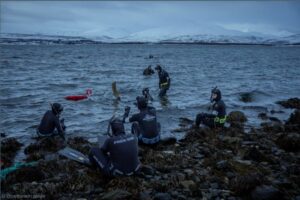
Local participants are the lifeblood of the project (with Rissa Citizen Science perhaps serving as its heart). Without these dedicated volunteers, there would be no kelp restoration. Twice each month, they gather, even during the Arctic winter when temperatures drop below zero and daylight disappears.
In 2025 alone, 455 volunteers took part in Rissa CS’ kelp restoration events. Known as the “Kelpers”, the participants are welcomed with free waffles and hot drinks and contribute both on land and in the sea. Word of mouth, reporting and outreach on Rissa CS’ digital platforms ensure strong participation.
What is the objected effect on biodiversity:
An urchin grazed sea is an ecological desert with only a few species
A mature Kelp forest however, can support more than 300 species of algae and animals
The shift from urchin barren to kelp forest is a spectacular ecological transformation
By involving local community members we demonstrate the importance of nature conservation
We foster stewardship of natural areas, and create a sense of connection between people and the restored habitats
Impression
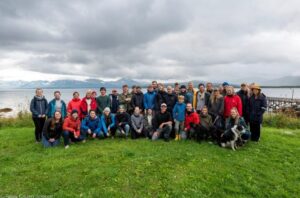
The complete Kelpers team
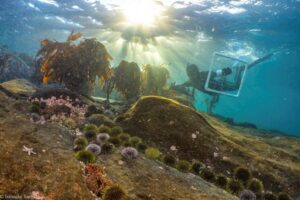
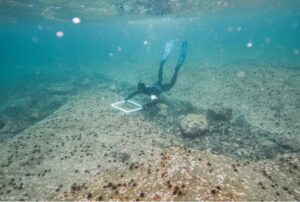
Plotting a part of the Kelp forest
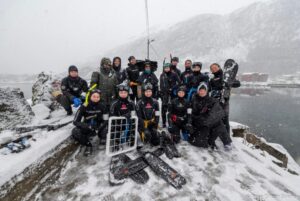
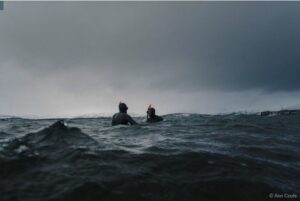
Kelpers in wintertime
Kelpers at Telegrafbukta
Kelp forest destroyed by urchins
Scuba divers help out
Accountability
We will report with clear and measurable indicators, to account for the spending of the donation: – Hours spent on the kelp forest restoration events and biodiversity workshop. Everyone at Rissa Citizen Science carefully clocks their time, which helps report the effort accurately. – Number and dates of the kelp forest restoration events (aim: 20 in 12 months, anticipating that a few will be cancelled due to unsafe weather conditions or sea state). – Number and dates of the biodiversity workshops (aim: 6 in 12 months). – Number of participants at each kelp restoration event (aim: 20 to 50, 20 on average, 400 in total). – Number of participants at each biodiversity workshop (aim: 5 to 10, 6 in average, 36 participants in total). – Based on the biodiversity workshops, biodiversity gain (species list) on the restoration sites – Number of urchins removed from the restoration site. – Area maintained, and area restored in 12 months throughout the two sites (in square meters. Aim: 100% of site 1 (200 meters of coastline) maintained, and 100% of site 2 (2,000 square meters) restored in 12 months.
More info on Rissa Citizen Science
Rissa Citizen Science is a non-profit organisation based on volunteers. All our projects are founded on trusted collaborations with local stakeholders and research institutions. Since November 2024, nearly 3,000 participants have joined 140 free hands-on events. We maintain a strong focus on measurable results, alongside communication and outreach. Our work has contributed significantly to kittiwake conservation, regenerative tourism, and kelp forest restoration in Northern Norway. Through the Urchin Density Challenge, we have engaged participants far beyond Tromsø. We are now restoring kelp forests at three sites, with great results and increasing recognition from academia and local partners.